
What it controls
Symmetry controls the derived median points of a feature relative to a datum center plane. It appears on some legacy drawings; ASME Y14.5-2018 withdrew it, and position is often a clearer modern alternative. The derived median points or derived median plane of a feature.
The tolerance zone
How the zone works
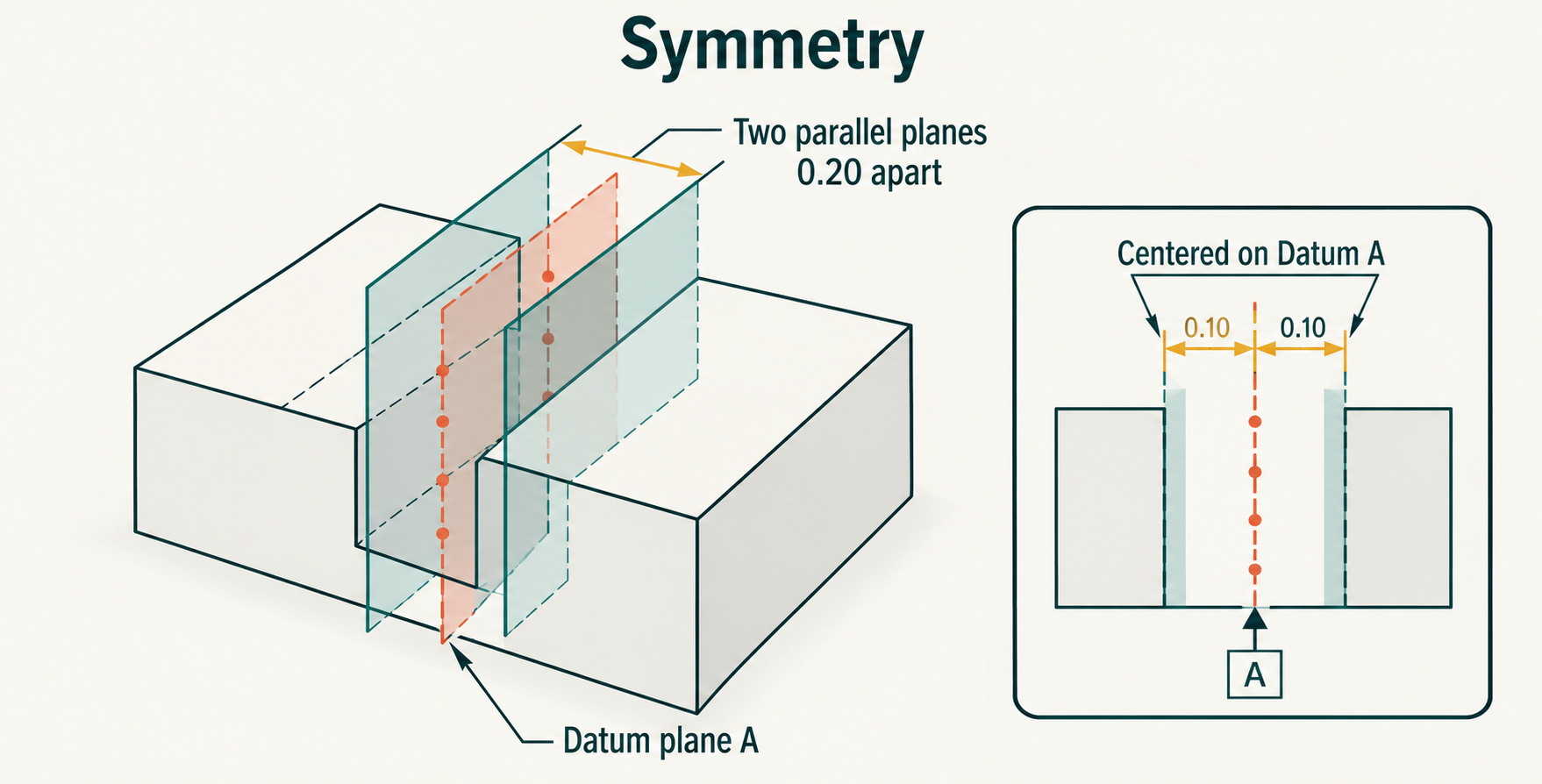
The median points of the controlled feature must remain between two planes that are equally disposed about the datum center plane. The tolerance controls the center of the feature, not merely its visible side surfaces.
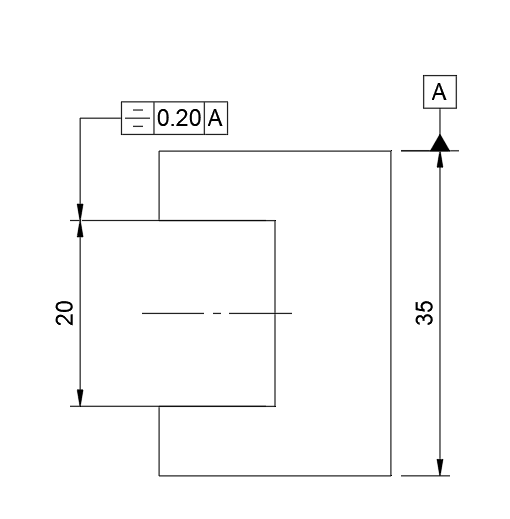
Example drawing
See Symmetry on a drawing
Tolerance zone visualized
See the tolerance zone in context
A difficult median-point requirement
Symmetry is the planar cousin of concentricity: it evaluates median points or a derived median plane rather than directly controlling the two actual faces. Because that is demanding to inspect, position of the feature’s center plane is often the more functional and verifiable requirement.
Example feature control frame
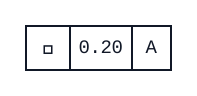
The derived median points of the controlled slot must remain between two planes 0.20 mm apart and centered about datum plane A.
Practical use
When to use Symmetry
Use symmetry only when the centered distribution of opposed material about a datum center plane is truly the functional need. For most slots, tabs, or paired faces, consider position first.
Inspection
How it is usually measured
A CMM can measure opposed surface elements, calculate their median points, and compare the derived feature to the datum center plane. Checking the two faces with calipers or measuring their distances independently does not necessarily evaluate symmetry.
Common mix-up
Symmetry controls the feature’s derived center, not simply the distances of its two visible faces from the datum.
Keep exploring
 Straightness
 Flatness
 Circularity
 Cylindricity
 Profile of a Line
 Profile of a Surface
 Angularity
 Perpendicularity
 Parallelism
 Position
 Circular Runout
 Total Runout
 Concentricity